
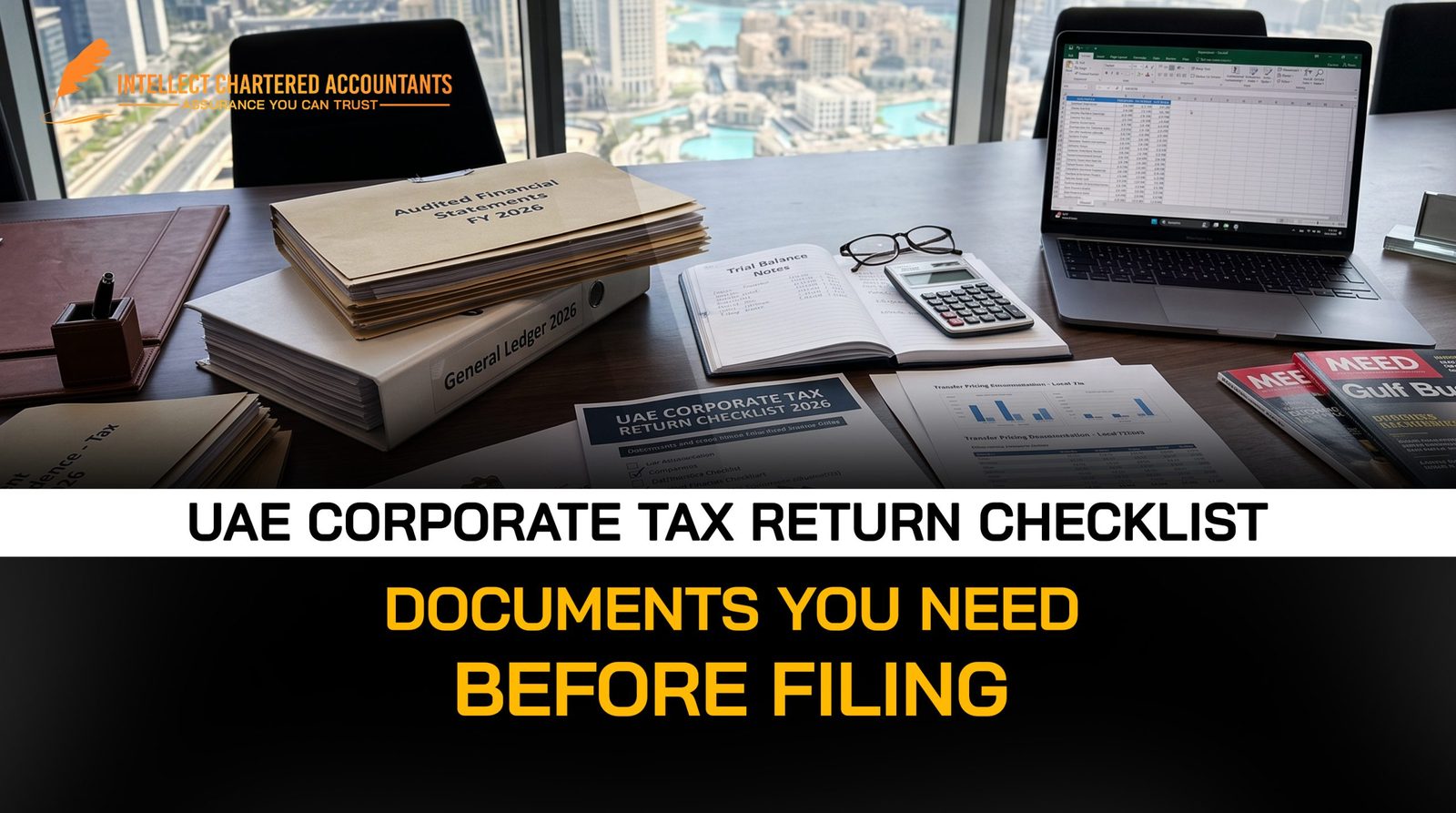
UAE Corporate Tax Return Checklist 2026
Preparing your documents before filing your UAE Corporate Tax Return can help reduce errors and make the filing process easier.
Businesses in Dubai and across the UAE should keep their Corporate Tax registration details, financial records, income information and supporting documents ready before filing.
Here is a simple UAE Corporate Tax Return checklist for 2026.
What Documents Are Required for UAE Corporate Tax Filing?
The main documents and records you should prepare include:
- Corporate Tax registration details
- Valid trade licence
- Financial statements
- Trial balance
- General ledger
- Sales and revenue records
- Business expense records
- Bank statements
- Fixed asset details
- Related-party transaction information, where applicable
- Business contracts and agreements
- Payroll records, where applicable
Not every business will need every document. The records required can depend on the company’s structure, activities and tax position.
1. Corporate Tax Registration Details
Keep your Corporate Tax registration information available, including:
- Corporate Tax TRN
- Company legal name
- Trade licence
- Registered business address
- Tax period
- Business activity details
Make sure your filing information matches your registered business details.
2. Financial Statements and Accounting Records
Your accounting records are essential when preparing the Corporate Tax calculation.
- Profit and Loss Statement
- Balance Sheet
- Trial Balance
- General Ledger
- Accounts Receivable
- Accounts Payable
- Cash flow information, where applicable
These records help establish the company’s financial position and taxable income.
3. Sales and Revenue Records
Prepare records showing the company’s income during the relevant tax period.
- Sales invoices
- Service invoices
- Customer statements
- Credit notes
- Contracts
- Other business income records
Your revenue figures should be consistent with your accounting records.
4. Business Expense Records
Keep supporting documents for business expenses such as:
- Rent
- Professional fees
- Marketing
- Software
- Utilities
- Insurance
- Office expenses
- Travel
- Payroll and employee costs
Proper supporting records make it easier to review the company’s Corporate Tax position.
5. Bank Statements
Business bank statements can help reconcile your accounting records.
- Business bank statements
- Bank reconciliation reports
- Relevant payment records
- Loan or financing records, where applicable
Review your bank records before finalising the Corporate Tax calculation.
6. Related-Party Transactions
If your Dubai or UAE company has transactions with related parties or connected persons, keep the relevant agreements and supporting documents.
- Management fees
- Loans
- Interest
- Service agreements
- Purchases or sales with related parties
These transactions may require additional Corporate Tax consideration.
7. Free Zone Companies
Free Zone businesses should also prepare their financial and business records for Corporate Tax filing.
Keep documents relating to:
- Free Zone licence
- Revenue
- Business activities
- Financial statements
- Customer invoices
- Contracts
- Supporting records relevant to the company’s tax treatment