
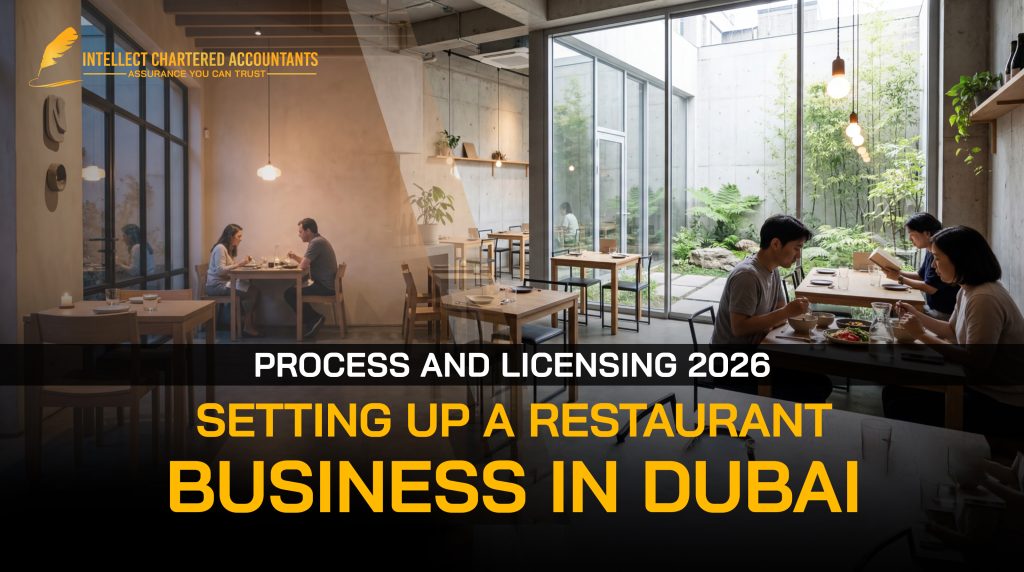
One wrong move could cost you everything in Dubai’s busy food world by 2026. Standing out means going beyond tasty dishes—smooth systems matter just as much. With tighter rules rolling in, getting things approved takes time, patience, and precise coordination. You will need clear steps lined up through both the Department of Economy and Tourism (DET) and Dubai Municipality (DM) before doors can open. The rewards are big—if you navigate the setup correctly.
At Intellect Chartered Accountants, handling tough setups is what we do. You’ll find clear guidance here—this guide walks you through opening a lawful, well-run restaurant in the UAE.
Step One: Jurisdiction and Legal Framework
Your market access and how freely you can operate will depend on where you are located in 2026.
- Mainland (DET): Most eateries go with Mainland. Serving nearby customers comes naturally here. Prime spots such as Downtown or Dubai Marina are open for picking. Running your own delivery vehicles works just fine, and there is no limit on where those deliveries can go.
- Free Zone: A space like this works well when testing new ideas or running delivery-only brands near key work areas—think places such as DMCC or DIFC. Even though you can own everything yourself here, doing business beyond these zones usually means teaming up with a local distributor or getting extra approval for mainland activity.
Step Two: Trade Name and Preliminary Clearance
A single name sets you apart, yet it must fit within UAE rules. Distinction means nothing without regulatory alignment.
- Trade Name Reservation: Filing with the DET takes care of holding your trade name. This is the first step in your legal identity.
- Initial Approval: Getting started means officials aren’t blocking your plans—now you can rent a spot and move on to securing required food licenses. This green light appears when authorities confirm no resistance, letting steps forward begin, such as site selection and preparing permit paperwork.
Step Three: Food Safety and Layout Approval (Dubai Municipality)
A fresh start happens here, technically speaking. By 2026, precise plans must shape everything the Food Safety Department reviews.
- Kitchen Layout Approval: A sketch of your kitchen needs to reach the municipality first—flat, clear, and drawn to scale. This 2D drawing proves how the workflow fits together.
- Space & Sanitation Requirements: * Kitchen Size: A space this size usually works best when it takes up close to 40% of the total restaurant area to ensure safe operations.
- Segregated Washing: Washing areas must be split into distinct sections—one for meat, another for vegetables, and a separate one for cooking tools. Division keeps things safe and stops cross-contamination before it starts.
- Final Inspection: A green light comes after plans pass review and construction wraps up. Surfaces must be non-absorbent, fireproof, and easy to clean. An inspector will verify each one meets those rules.
Step Four: Premises and Civil Defence
The last stop on the permit trail—a physical brick-and-mortar space is not optional for a restaurant.
- Ejari: Ejari is required when it comes time to lock down a rental deal. Without this digital stamp on file, the last piece of business paperwork won’t come through. Final approval waits behind this registered lease.
- Dubai Civil Defence (DCD): A green tag on your kitchen gear comes from DCD. Inspections of fire suppression hoods and gas lines are mandatory to ensure the safety of your staff and customers.
Intellect Edge: 2026 Compliance
Every day brings fresh challenges when running a diner in 2026—money matters, rule changes, and constant updates. Dealing with code details is where Intellect steps in.
- Person in Charge (PIC): A single trained Person in Charge is required at every restaurant. This individual must finish Dubai Municipality’s essential course on handling food safely.
- Occupational Health Cards (OHC): Getting a green slip means workers need checkups first. Anyone touching meals goes through health screening to hold an OHC.
- VAT Return Filing: Running a food spot means high daily sales volumes. We make sure your POS-generated “Z-Reports” line up perfectly with what you report. Accuracy matters most when numbers add up across hundreds of receipts.
- Corporate Tax Assessment: With the 9% Corporate Tax in place, staying compliant means tracking what you can deduct. Intellect steps in with a clear evaluation of your company’s tax responsibilities, handling allowable costs without confusion.
- Statutory Audits: To update your DET permit or handle banking needs, audited financial statements are often required. We deliver these reports following international IFRS standards.
Why Partner with Intellect?
More than 21 years deep in Dubai, Intellect Chartered Accountants builds trust through sharp audits and smart business launches.
- Free Bank Account Opening: We step in with ties to Wio Bank and DIB, smoothing the path for your corporate banking. Tough KYC checks are standard for F&B firms, but our links help move things faster.
- UAE Golden Visa: A path to 10-year residency opens for restaurant owners who’ve made their mark. We guide successful investors through every step of the Golden Visa process.
- End-to-End PRO: Starting at city planning sign-offs and moving through to team work permits—one path covers it all.
What if starting your food business felt simpler? Connect with the experts at Intellect now for a no-cost session. While you tweak recipes, we’ll sort through the paperwork. Getting started doesn’t have to mean getting stuck.