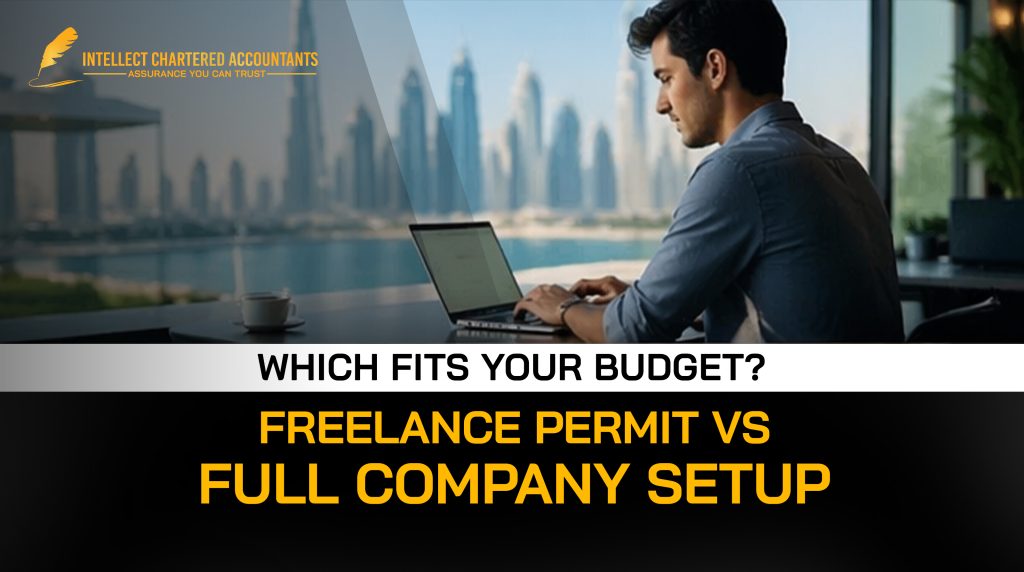
One step into the UAE job scene in 2026 often leads here: choose a freelance permit or full business registration. Living and working there? Both paths clear that hurdle. Yet what happens to savings—and chances later—shifts hard depending on which road gets picked.
Budget details sit alongside daily operations, offering clarity when deciding. Each piece fits differently depending on your needs.
1. The Cost of Entry (Year One)
Most freelancers pick the permit first—it skips office rentals and cuts paperwork clutter. Costs stay low since there’s no lease and no corporate filings piling up.
- Freelance Permit: A sum of roughly AED 10,000 to AED 15,000 is typical. Around AED 7,500 goes toward the one-year permit itself. The process also requires an Establishment Card, costing about AED 2,000. Residency visa charges make up the rest of the total.
- Full Company Setup: The cost usually lands from AED 25,000 to AED 45,000. Trade license expenses come into play right away. Office space is required—yes, even a shared desk counts. Fees for registering the business and visa paperwork for corporate staff form part of the total.
2. Physical Space and Office Needs
In 2026, “substance” is a major buzzword in UAE regulations.
- Freelance Flexibility: Home base? Not needed. Your name is the company now. Work kicks off from your kitchen table if you like. Cafes fit too. Even shared desks show up—think GoFreelance in TECOM. Wherever works, just start.
- Full Company Requirement: For a full company, having a real street address is required. Though small, even shared desk spaces aren’t free—expect around AED 12,000 to AED 20,000 each year. When bringing on employees, how much space you lease directly affects how many work permits you can get.
3. Corporate Tax Implications
A fresh look at taxes in 2026 shows how one rule applies here, yet another path unfolds over there.
- Freelancers: Working alone? The system sees you as an individual. Hit over AED 1 million a year in revenue, then registration kicks in. Stay under that line—no 9% charge usually applies. Only profits beyond the limit bring corporate taxation into play.
- Companies: Even if your earnings are low, signing up for Corporate Tax is required. Though profits under AED 375,000 stay tax-free, more work comes with reporting duties. Keeping audit-ready records is part of the process.
4. Scalability and Credibility
- Individual Path: Working solo means using your own name instead of a business title. Great for freelancers and artists, though sometimes tricky when chasing big jobs. Some corporate deals or public sector bids expect a registered company setup.
- Corporate Path: Running things through a registered company means working under a business name. When hiring staff becomes necessary, this setup makes sense. Should family members need sponsorship, it offers clearer paths forward. Banks tend to take these entities more seriously when applying for accounts—something still tricky for independent contractors by 2026.
Summary Comparison Table
| Feature | Freelance Permit | Full Company Setup |
| Initial Cost | Lower (Around AED 12k) | Higher (Above AED 30k) |
| Visa Availability | One (Self Only) | Multiple (Depends on Office Space) |
| Corporate Tax | After AED 1 Million Turnover | Registration Required (9% over AED 375k) |
| Name Use | Personal Name | Formal Business Brand |
| Bank Accounts | Individual/Freelancer Tiers | Corporate Business Banking |
Export to Sheets
The Verdict
- Pick the Freelance Permit when working alone—maybe as a consultant, designer, or tech expert—and keeping costs low while staying small for now.
- Pick Full Company Setup when plans include bringing people on board or operating with real products. Trust at higher levels usually follows this kind of organization, and serious partnerships tend to form easier when the framework exists.
Office: 807, Clover Bay Tower, Business Bay, Dubai, UAE Contact: +971 4 222 9911 | info@intellectca.ae Website: https://intellectca.ae/